Lay the ground. Let it live.
Build a living world — not just a map.
Start with a map. End with a living world. Simulate populations, settlements, trade, migration, and conflict — all driven by systems that evolve over time. Then carry that world forward into every tool at your table, without rebuilding anything twice.
 Launch Realm Engine
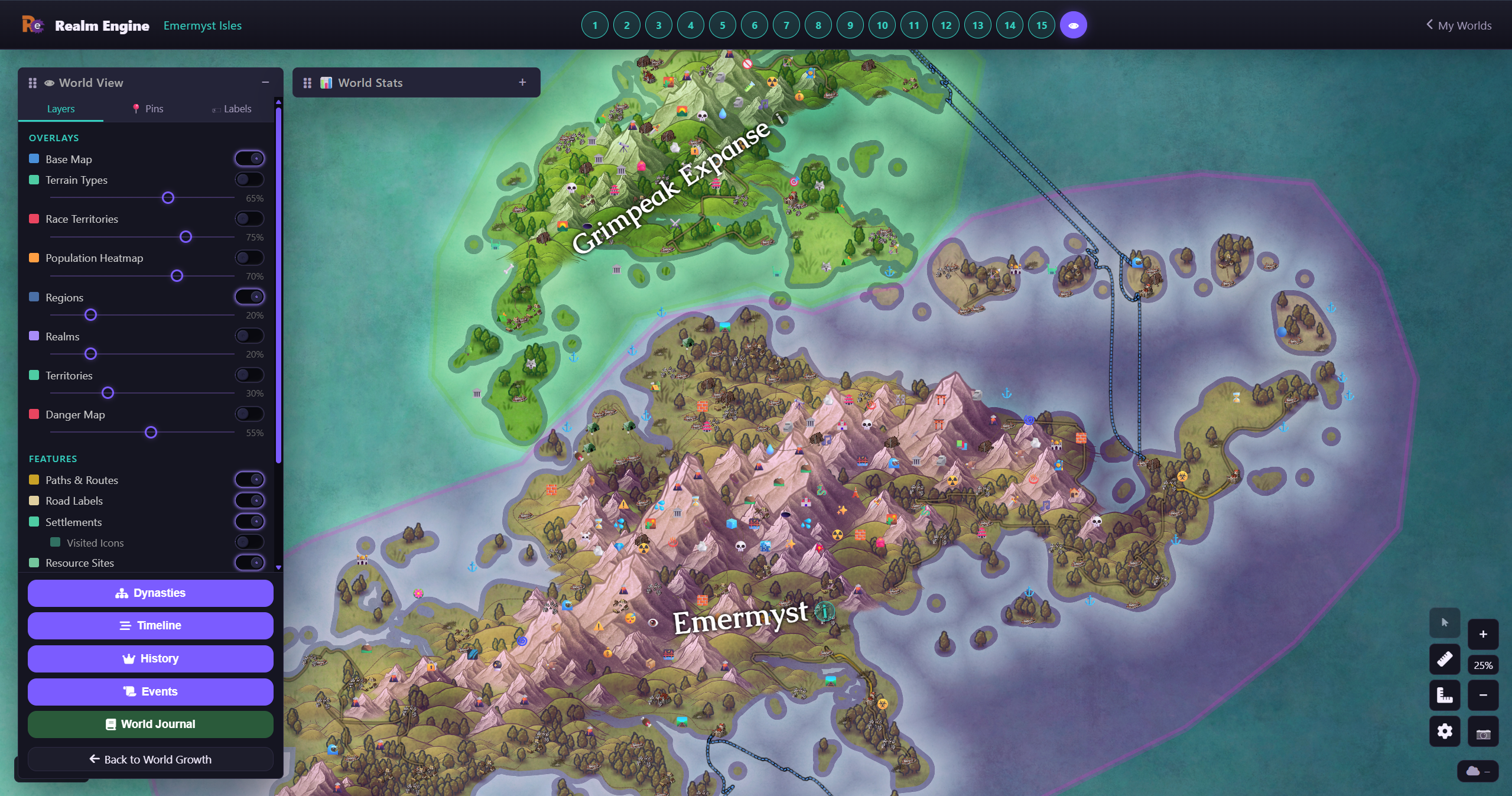
From blank map to living world in 16 steps.
Realm Engine walks you through every layer of world-building — from raw terrain to thriving civilizations, dynasties, territories, and the stories hidden between them.
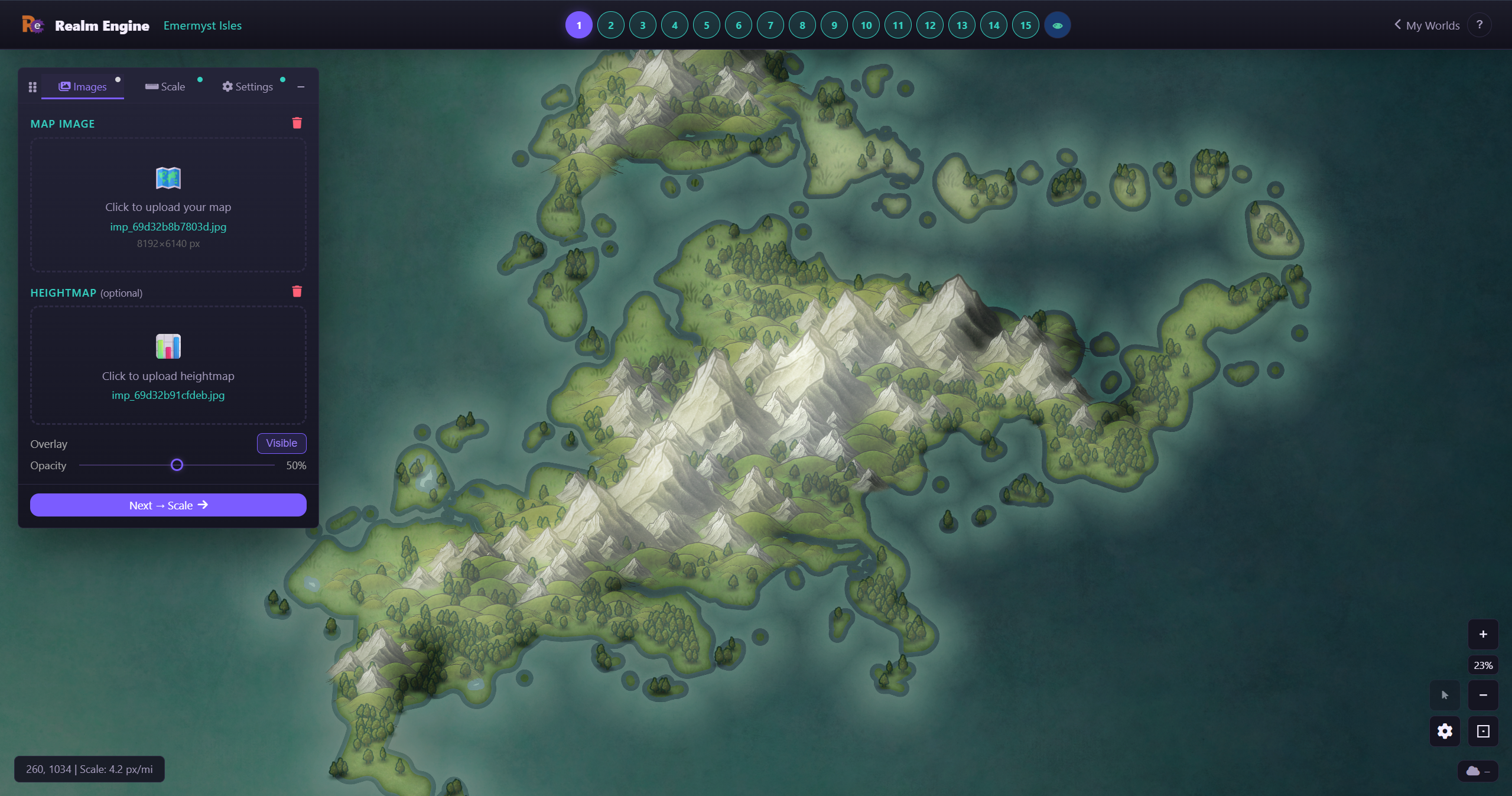
Map Setup
Upload your fantasy map and heightmap. No heightmap? Most AIs can generate a realistic one from a flat map image. Set your world's scale, give it a name, and you're off — this is the foundation everything else is built on.
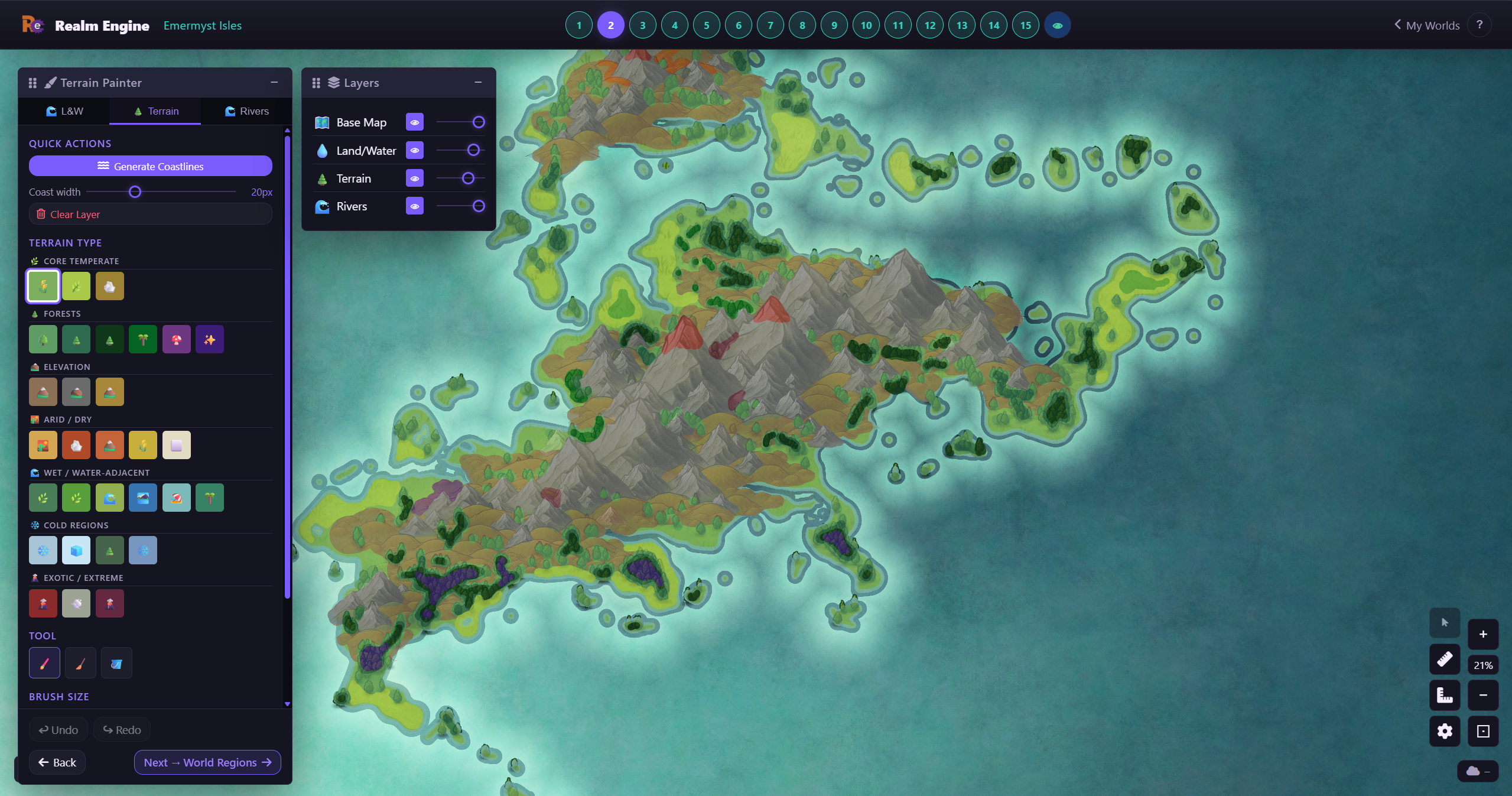
Land & Water
Auto-generate a land/water mask from your heightmap, then paint terrain — coastlines, grasslands, mountains, swamps. Terrain directly affects how populations spread, where they settle, and how fast they grow.
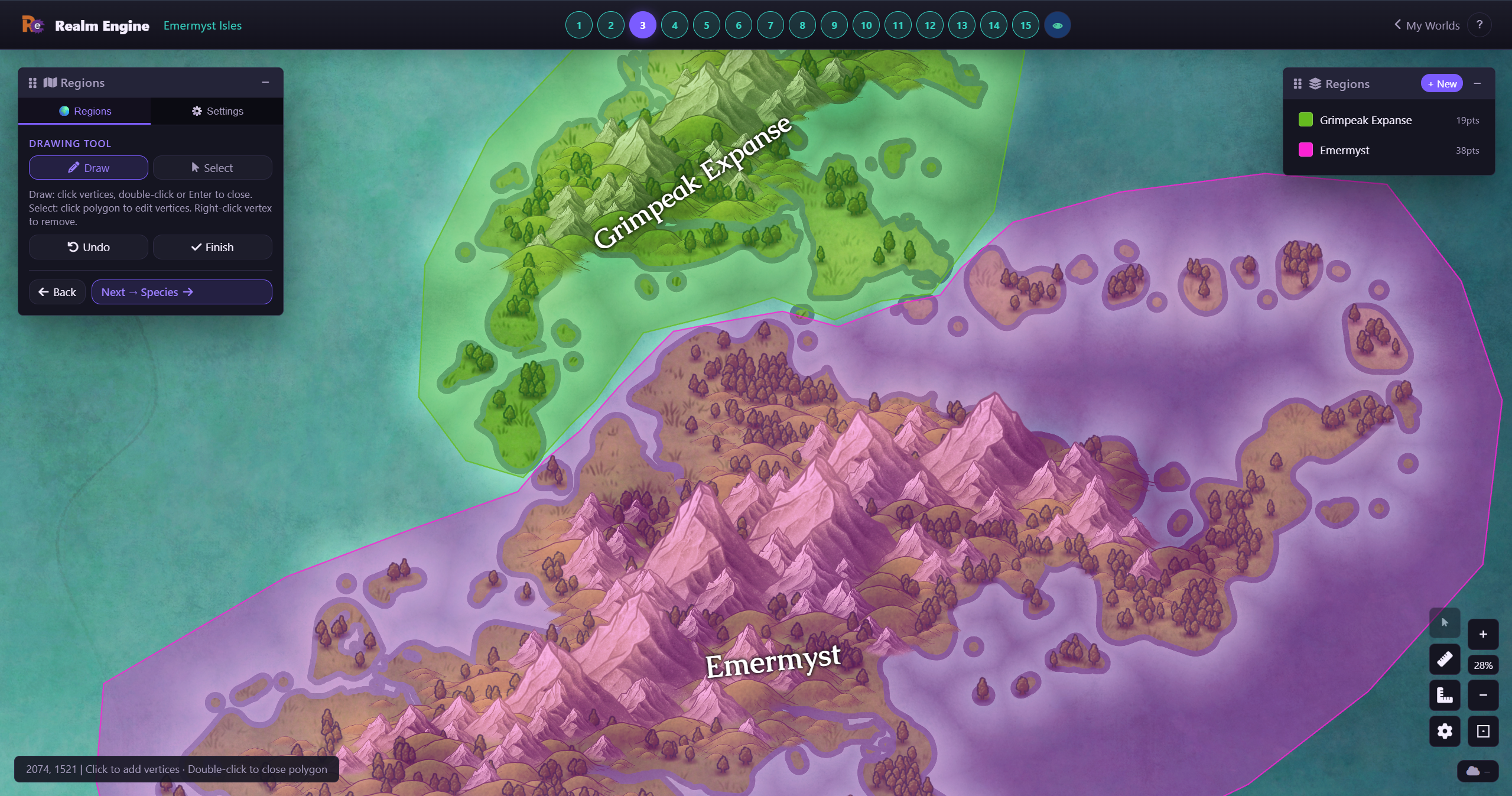
Regions
Draw your major regions — continents, island chains, landmasses. These define the broadest political and cultural boundaries. Countries will live inside them, and populations will spread within their borders first.
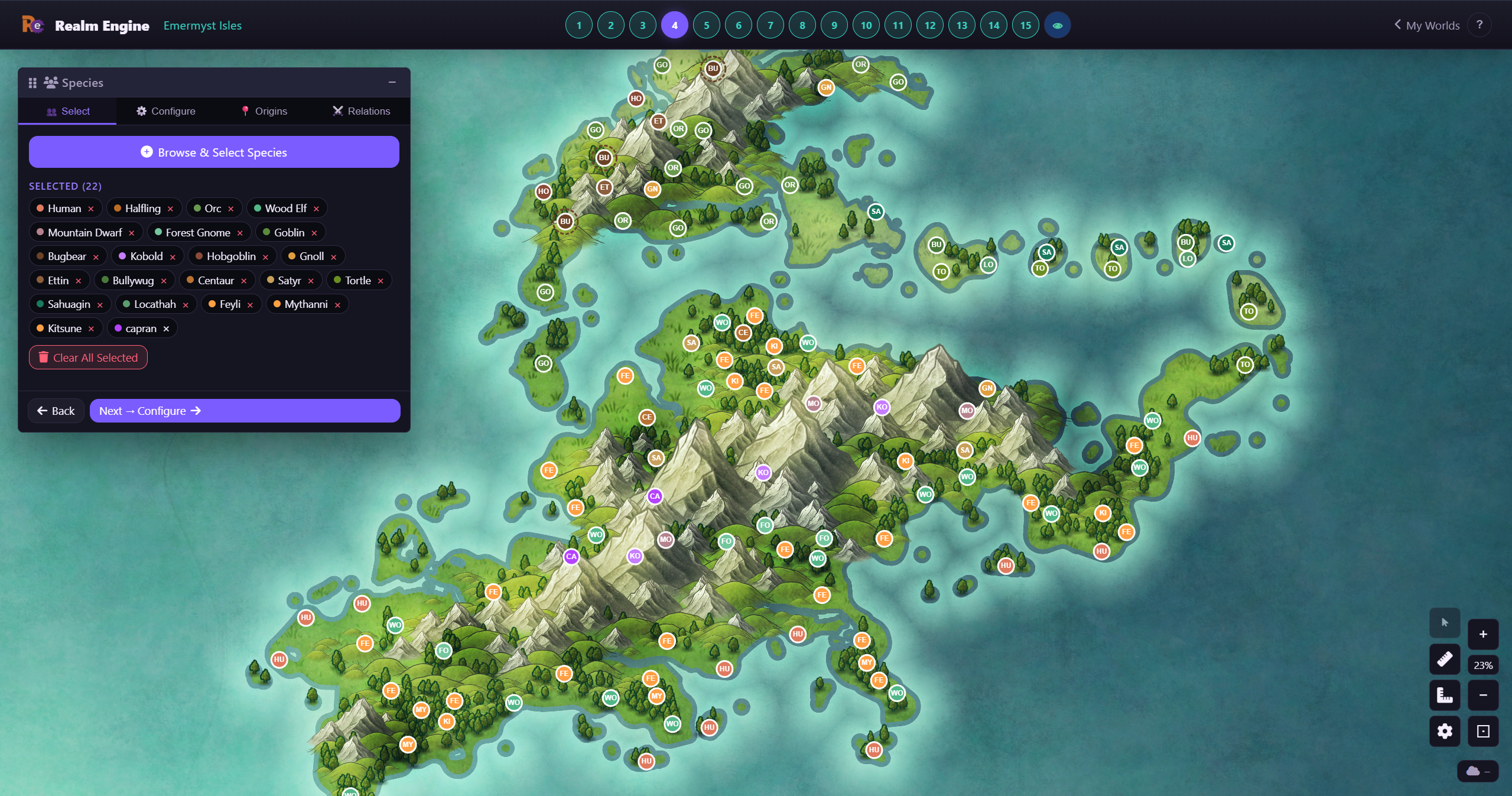
Species
Humans, elves, goblins, or something entirely your own. Configure lifecycle data — lifespans, adulthood ages, aging brackets. Tune hostility, expansion rates, and terrain preferences. Every species behaves differently.
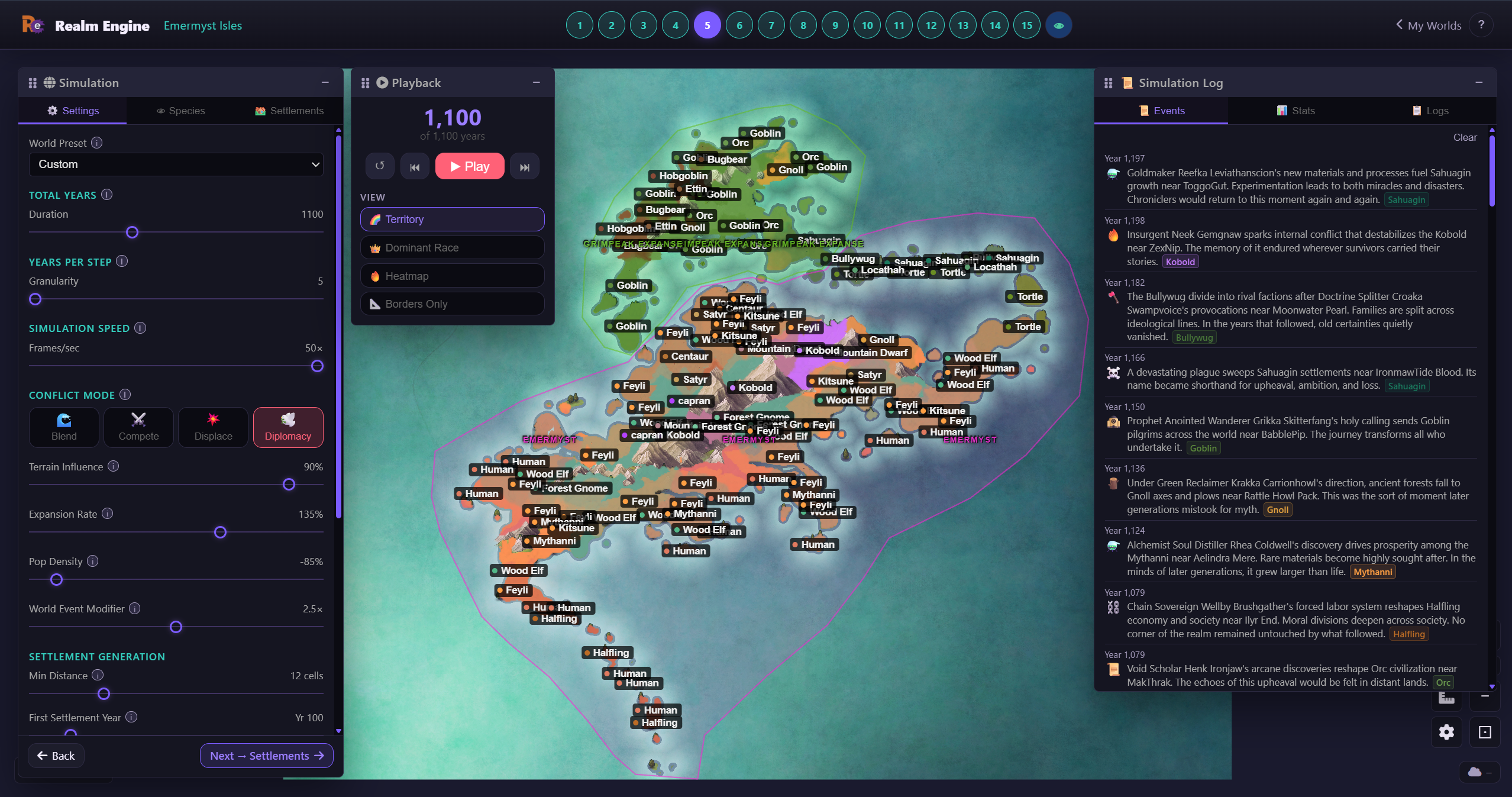
Expansion
Seed your species across the map and run the expansion simulation. Watch centuries unfold — populations spread organically based on terrain, hostility, and proximity. Settlements are generated automatically where populations cluster. Historical figures emerge from the founding era.
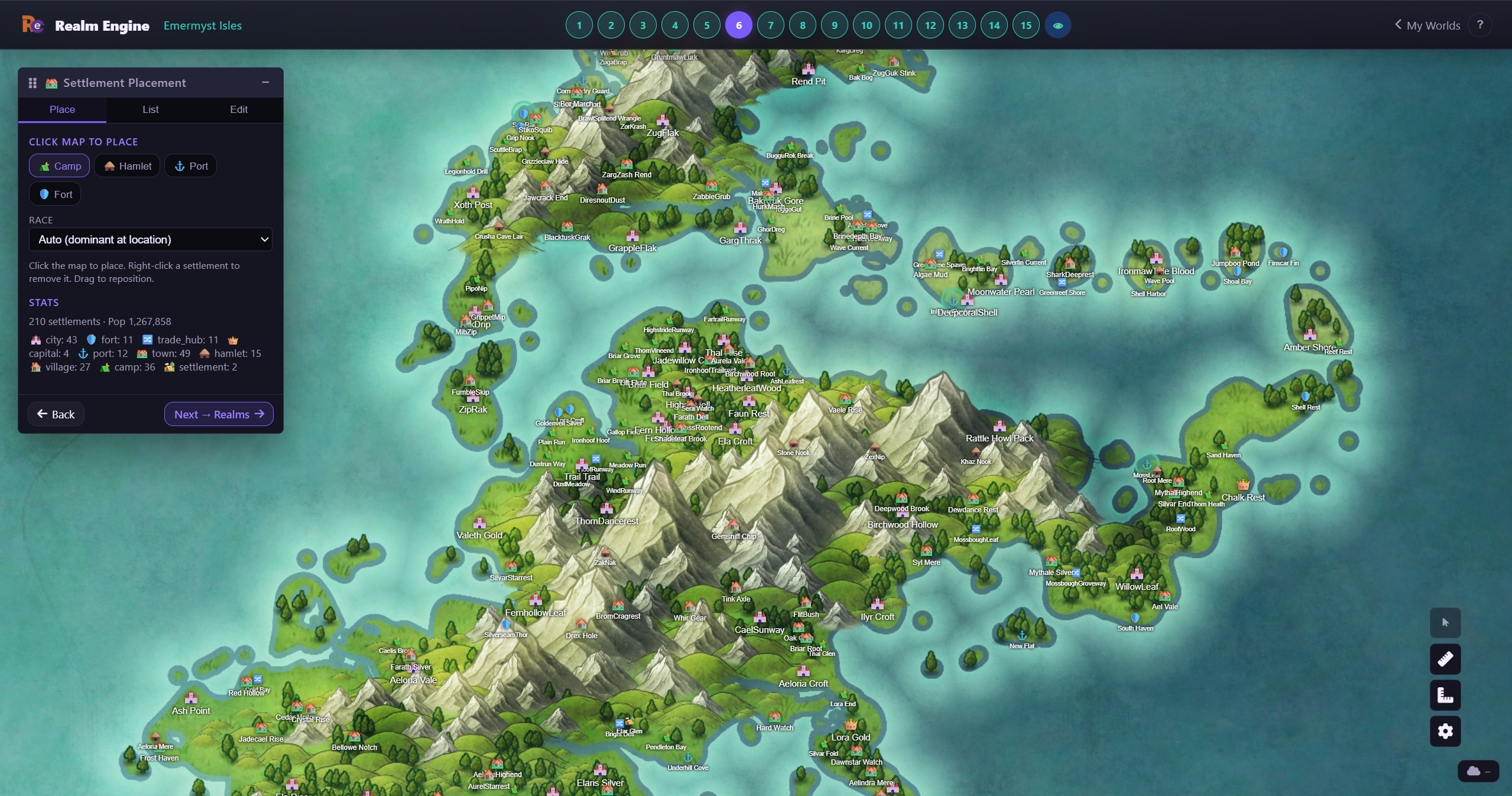
Settlements
Review every settlement the simulation generated. Rename them, adjust types, mark key settlements as protected so they survive future simulations. Add or remove settlements by hand. This is where you take ownership of the world the engine built.
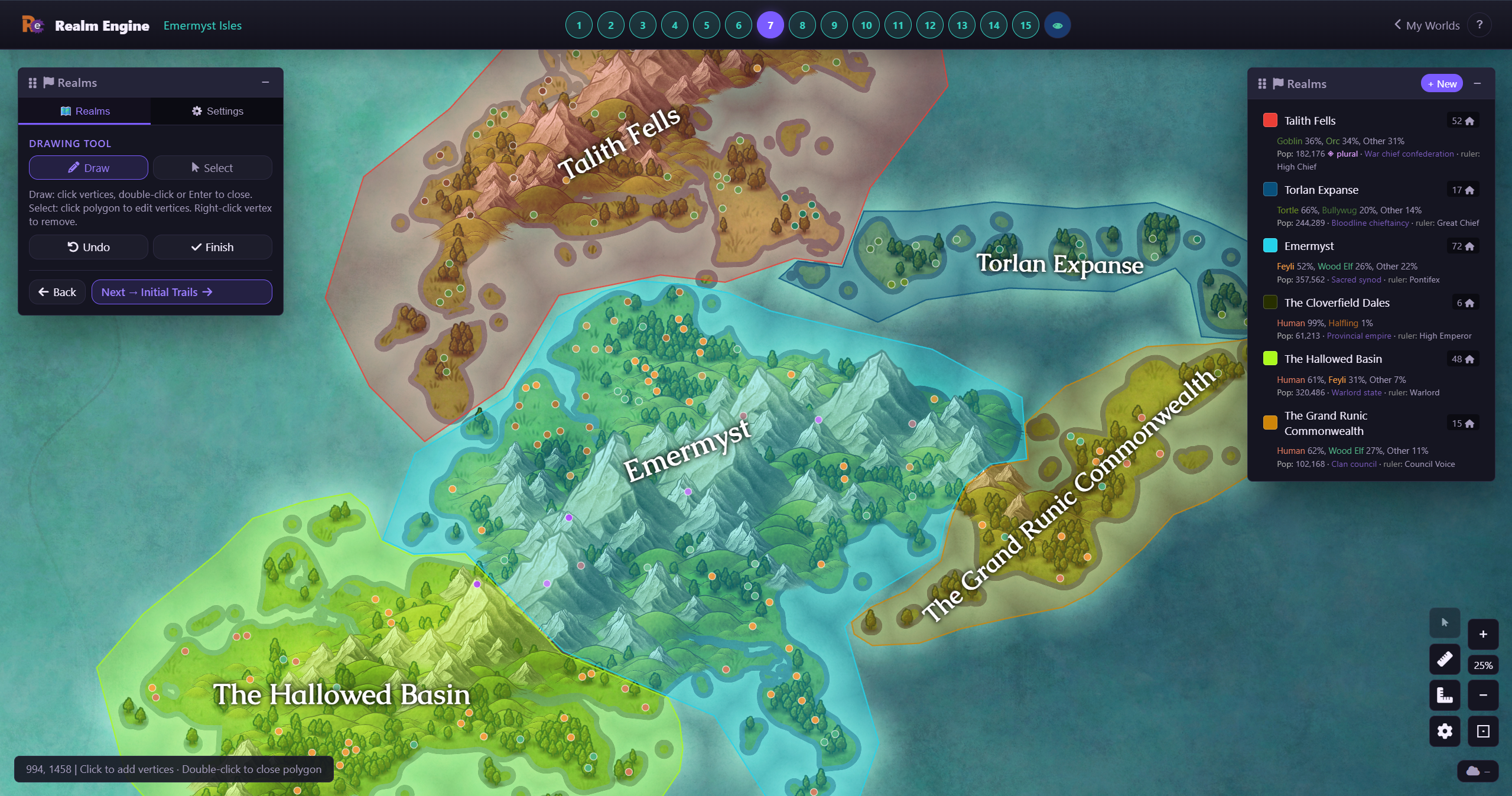
Realms
Draw country borders, then assign government types — monarchy, theocracy, republic, tribal confederacy, and more. Each government type determines succession rules, ruler titles, and political stability. Demographics are calculated automatically from the populations within.
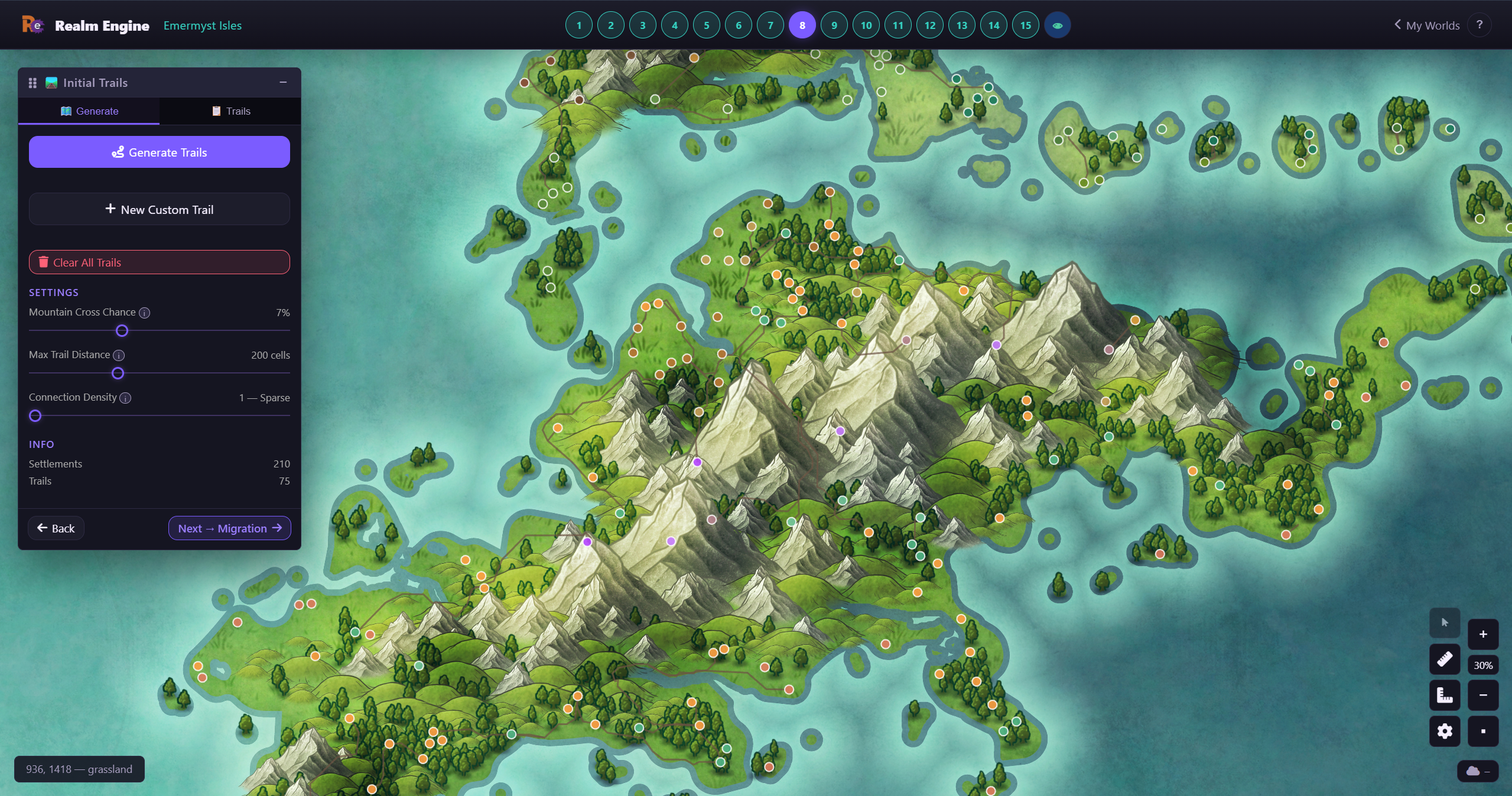
Initial Trails
Generate the earliest trails connecting settlements — the dirt paths and trade tracks that existed before real roads. These initial connections influence how the Great Migration flows and where populations shift next.
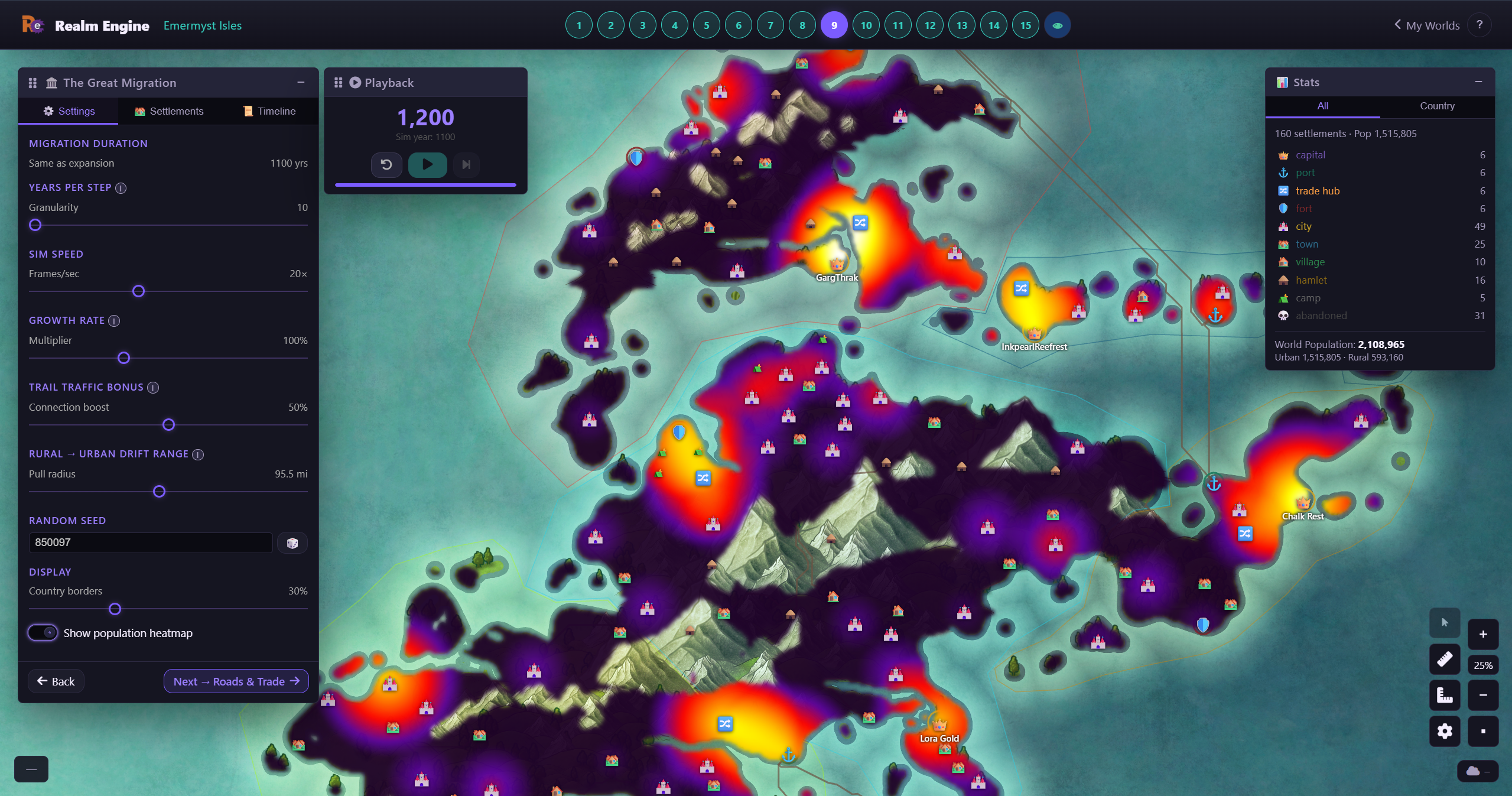
The Great Migration
Run the great migration — populations flow along trails, settle near roads, flee danger. Settlements grow, shrink, or are abandoned. Cultural exchange blends populations at crossroads. Consolidation-era historical figures emerge from the upheaval.
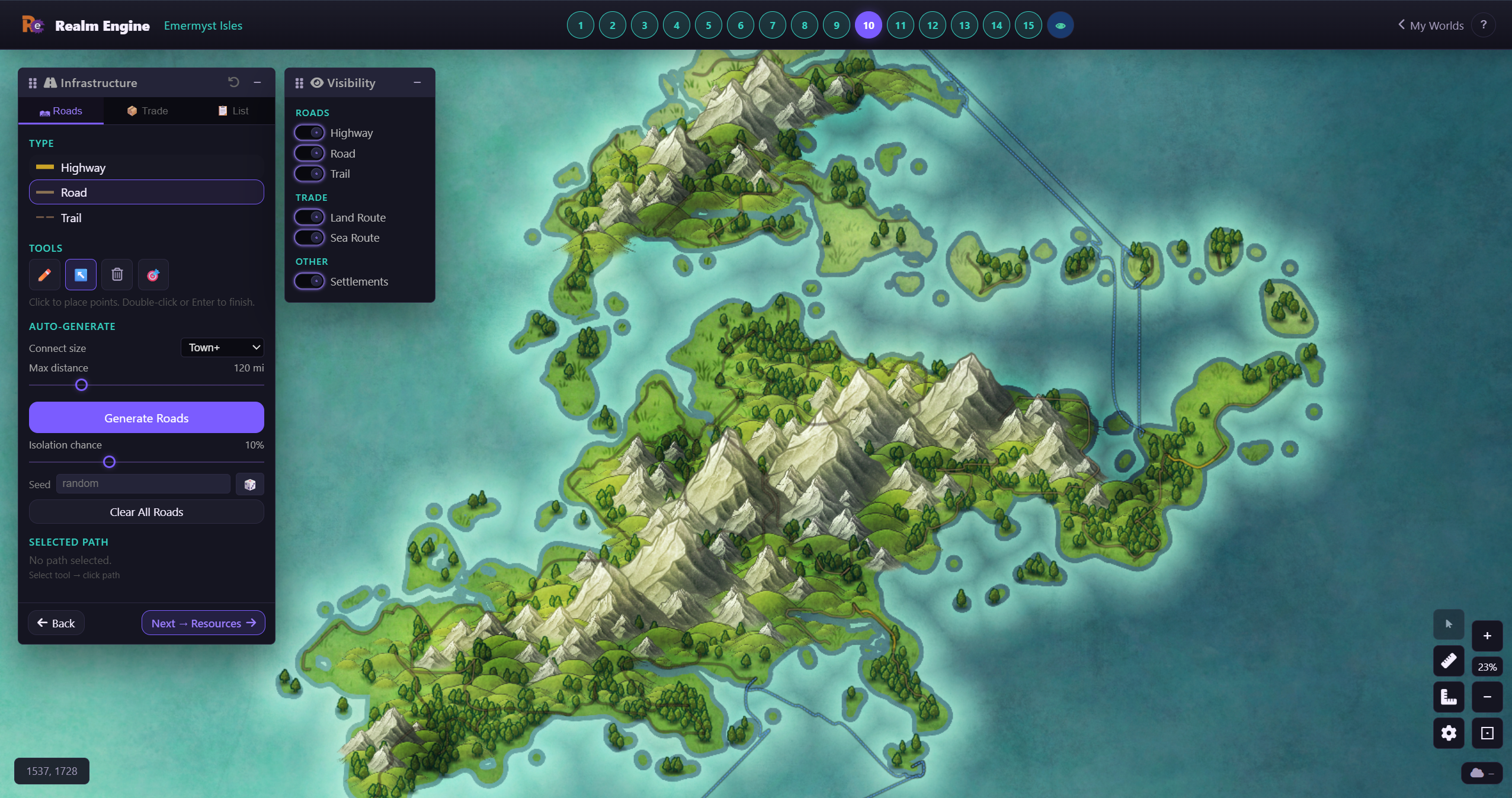
Roads & Trade
One click generates roads, land trade routes, and sea lanes. Edit each one — adjust paths, choose which settlement sizes get connected. Roads make travel safer. The wilds are not. Every route you draw becomes data The Long Road can use.
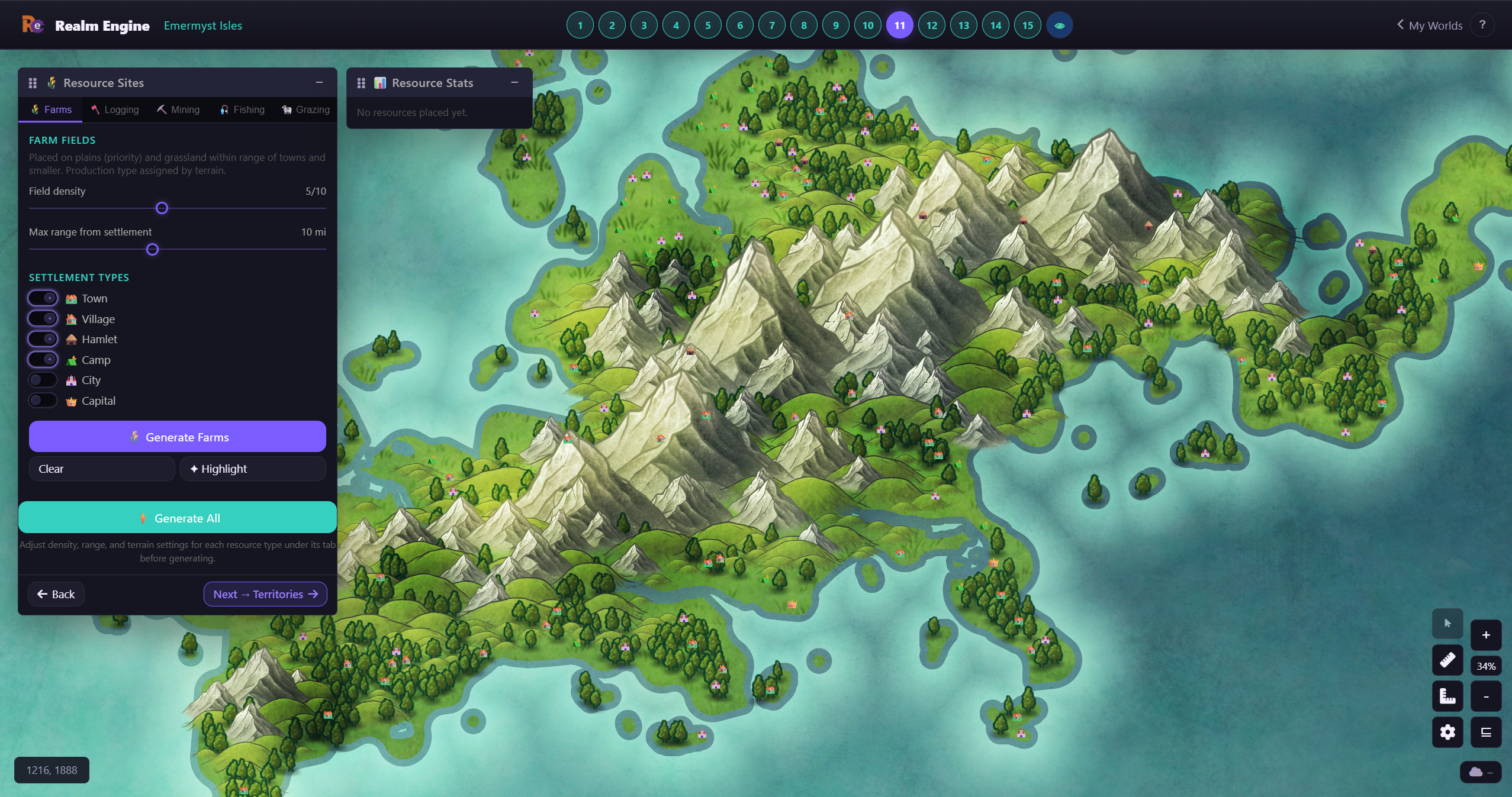
Resources
Every city needs to eat. Generate farms, logging camps, mining outposts, fishing spots, and grazing land. Set distance limits and density per settlement. The economy that sustains your civilizations takes shape around them.
Territories
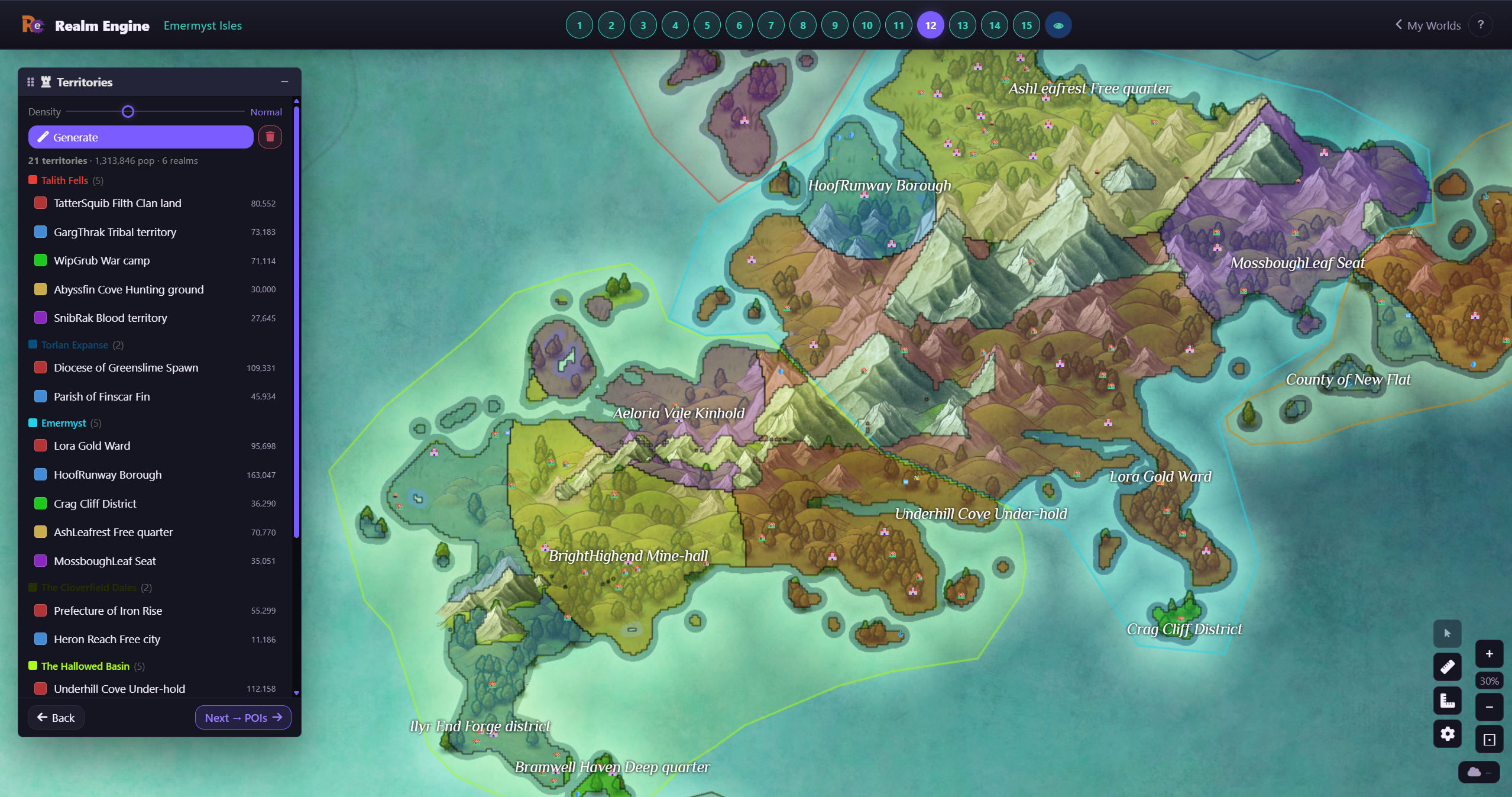
Each realm is subdivided into territories — duchies, baronies, clan lands, dioceses — based on its government type. Territories are generated from population density using grid-cell subdivision, giving each region its own identity and ruler.
Points of Interest
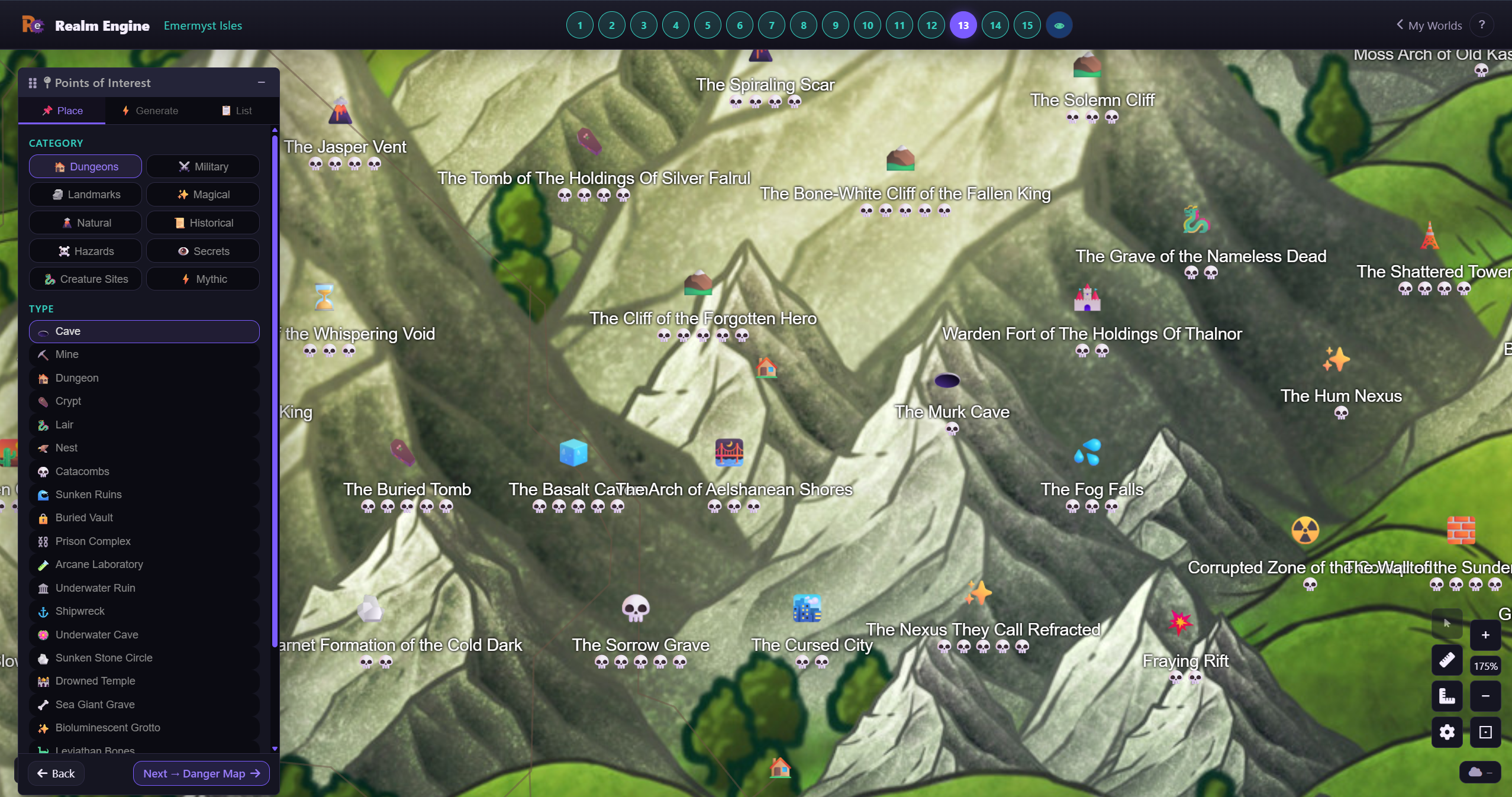
Dungeons, ruins, shrines, camps — place them one by one or generate the whole map at once. Each POI has its own danger level, NPC inhabitants with full stat blocks, and is fully editable. Click any POI for its full profile.
Danger Map
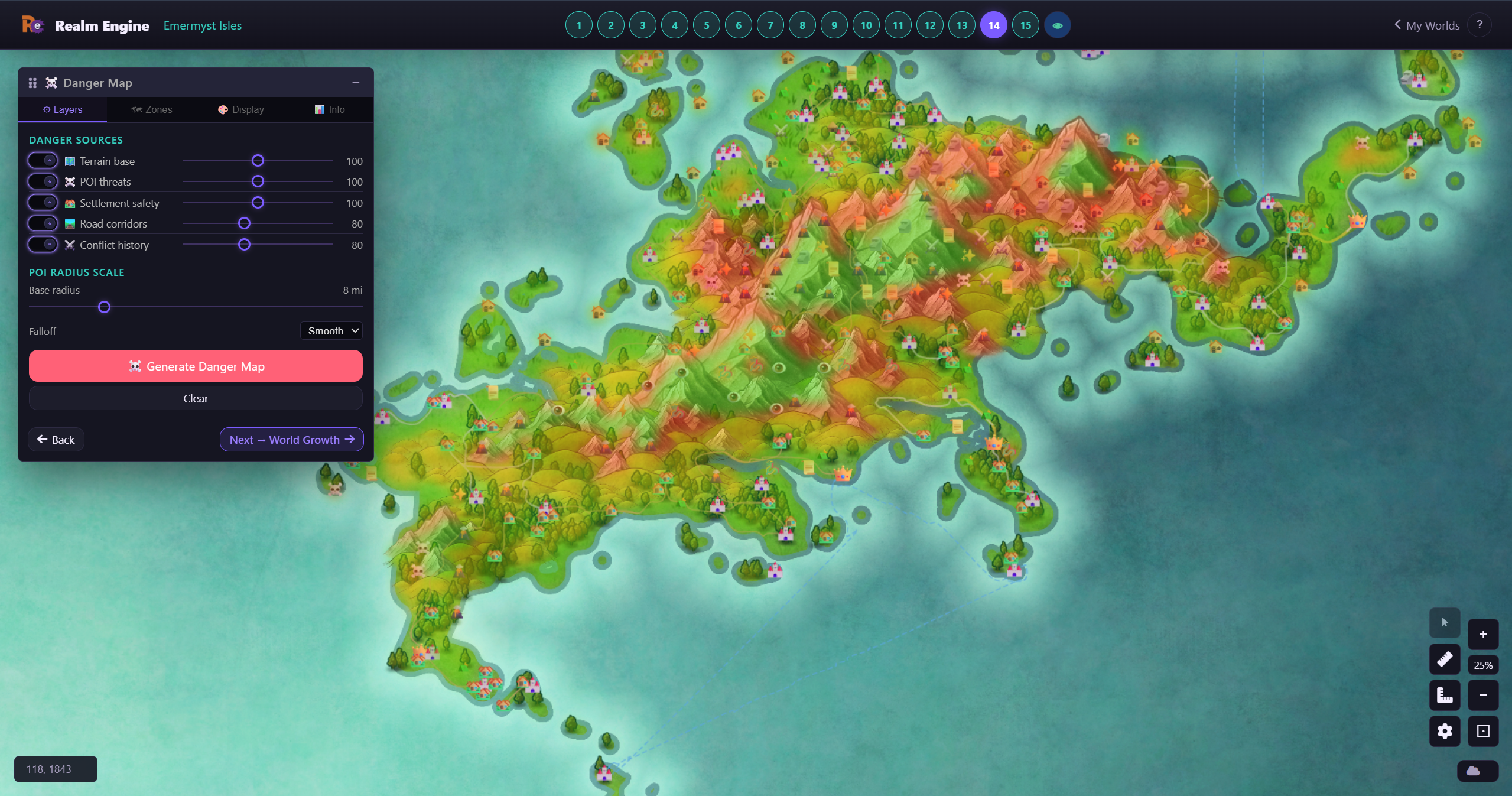
Dungeons and hostile-race territories create natural danger hotspots visible across the map. Draw custom danger zones — dragon lairs, cursed forests, bandit country. Populations avoid these areas. Travelers take the long way around.
World Growth
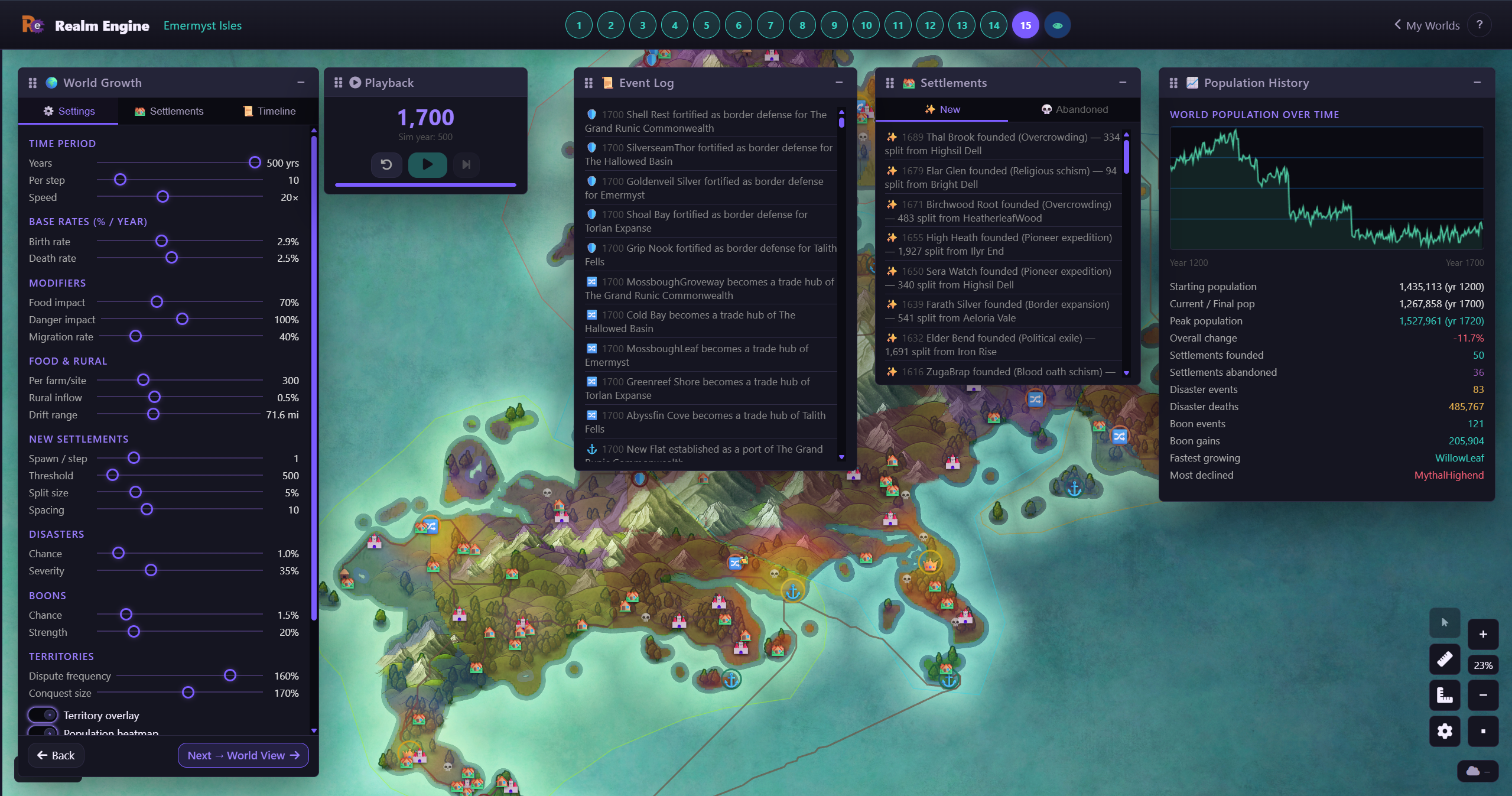
The final simulation pass. Territories expand and absorb neighbors. Dynasties rise and fall. Rulers are born with full NPC stat blocks — spouses, children, claims, assassinations, coups. Thousands of timeline events weave together into a living history.
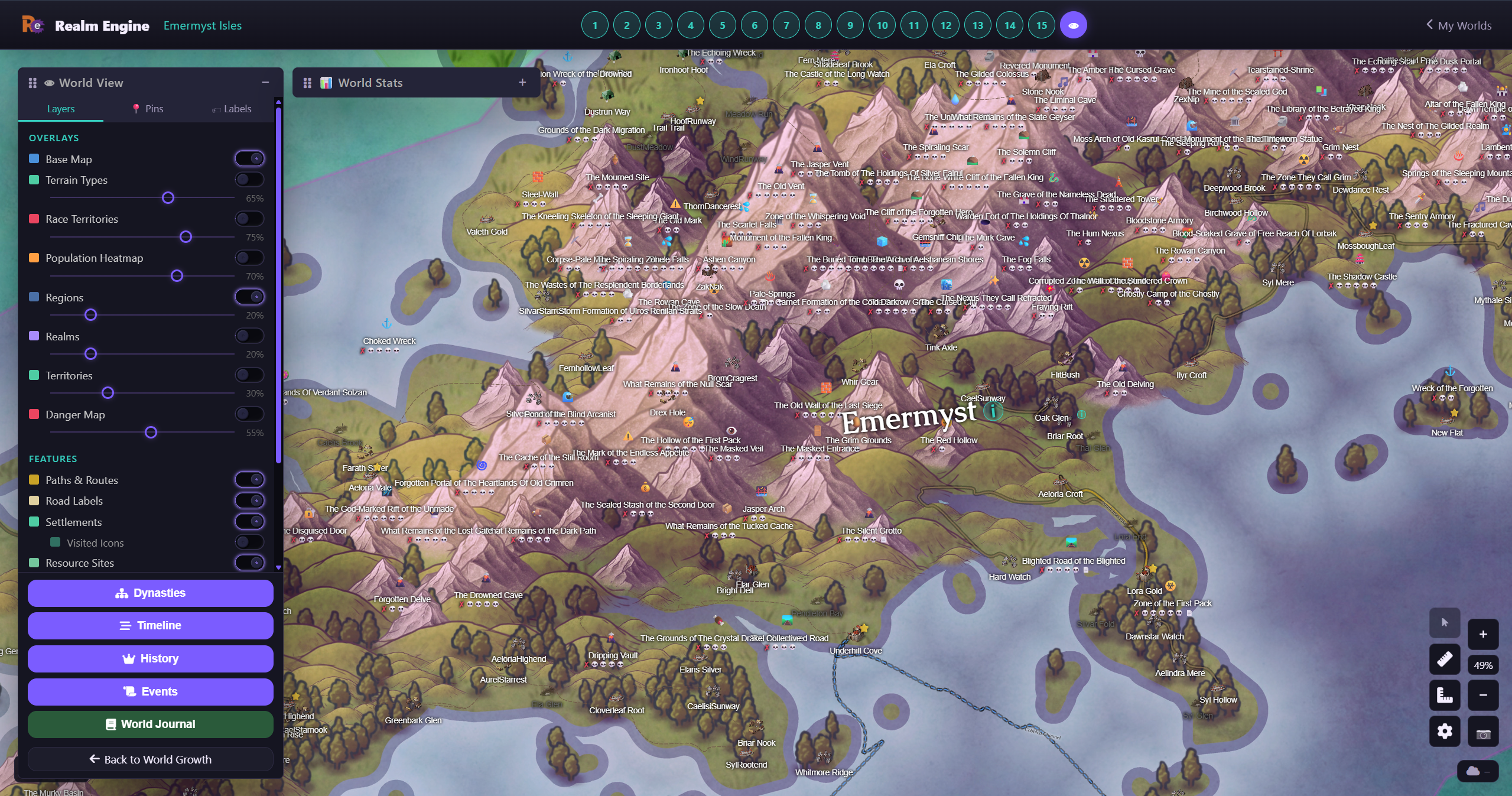
World View
The complete world — every settlement, road, POI, territory, and border on a single interactive map. Browse the zoomable World Timeline. Explore dynasty trees. Click any ruler for their full profile. Export as PDF, HTML site, high-res image, or world journal.
Everything the world needs to feel real.
Realm Engine handles the layer beneath the story — so when something happens at the table, the world already knows why.
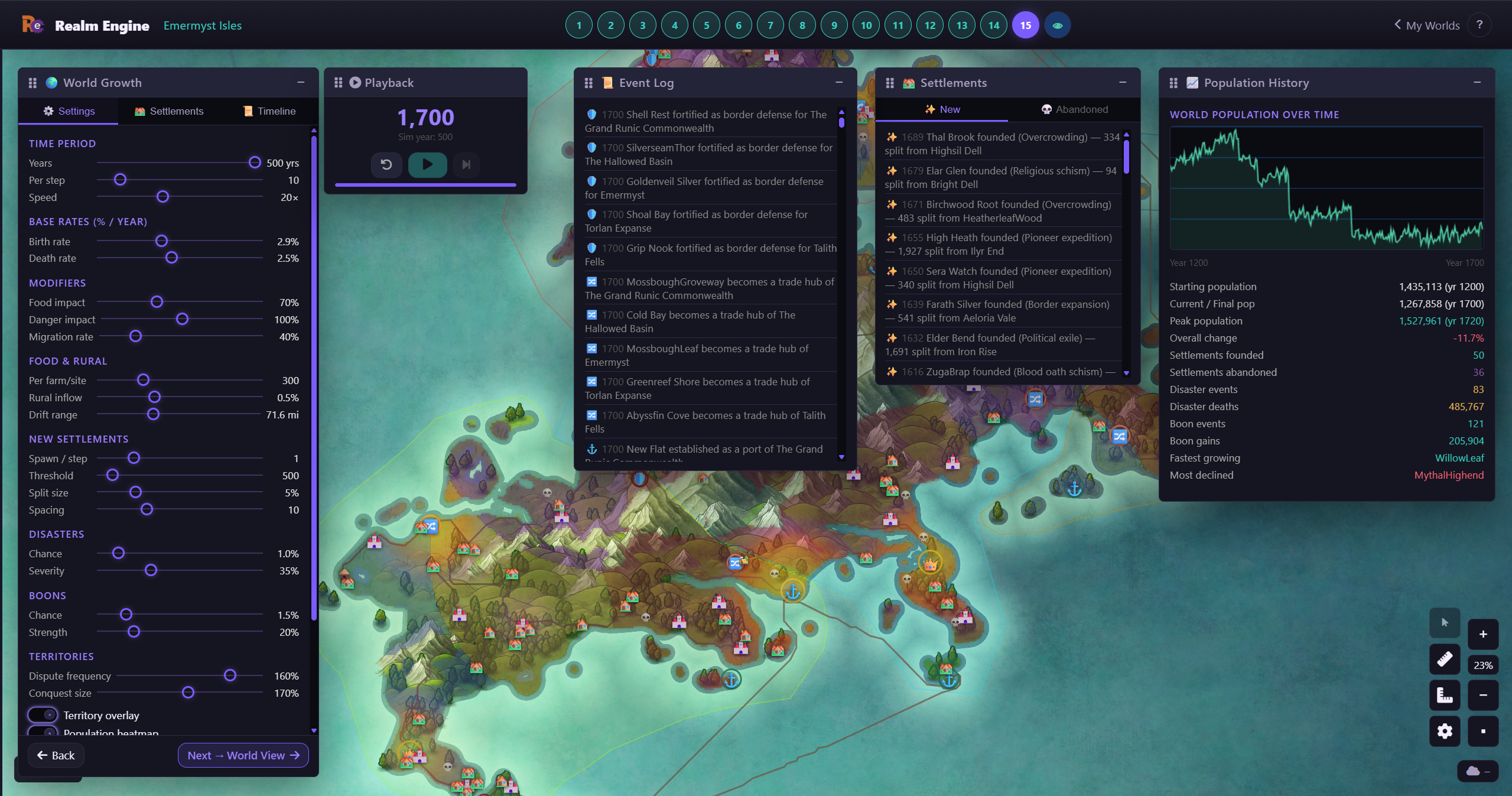
Civilization Simulation
Watch civilizations rise and fall without scripting anything. Populations spread according to terrain, pressure, proximity, and opportunity. Settlements emerge where growth holds, shift when migration changes, and collapse when the world turns against them.
Terrain-Aware Systems
Mountains block expansion. Rivers guide trade. Wetlands slow movement. Every major system reads the land first, so your world behaves like a place with physical rules instead of a list of disconnected locations.
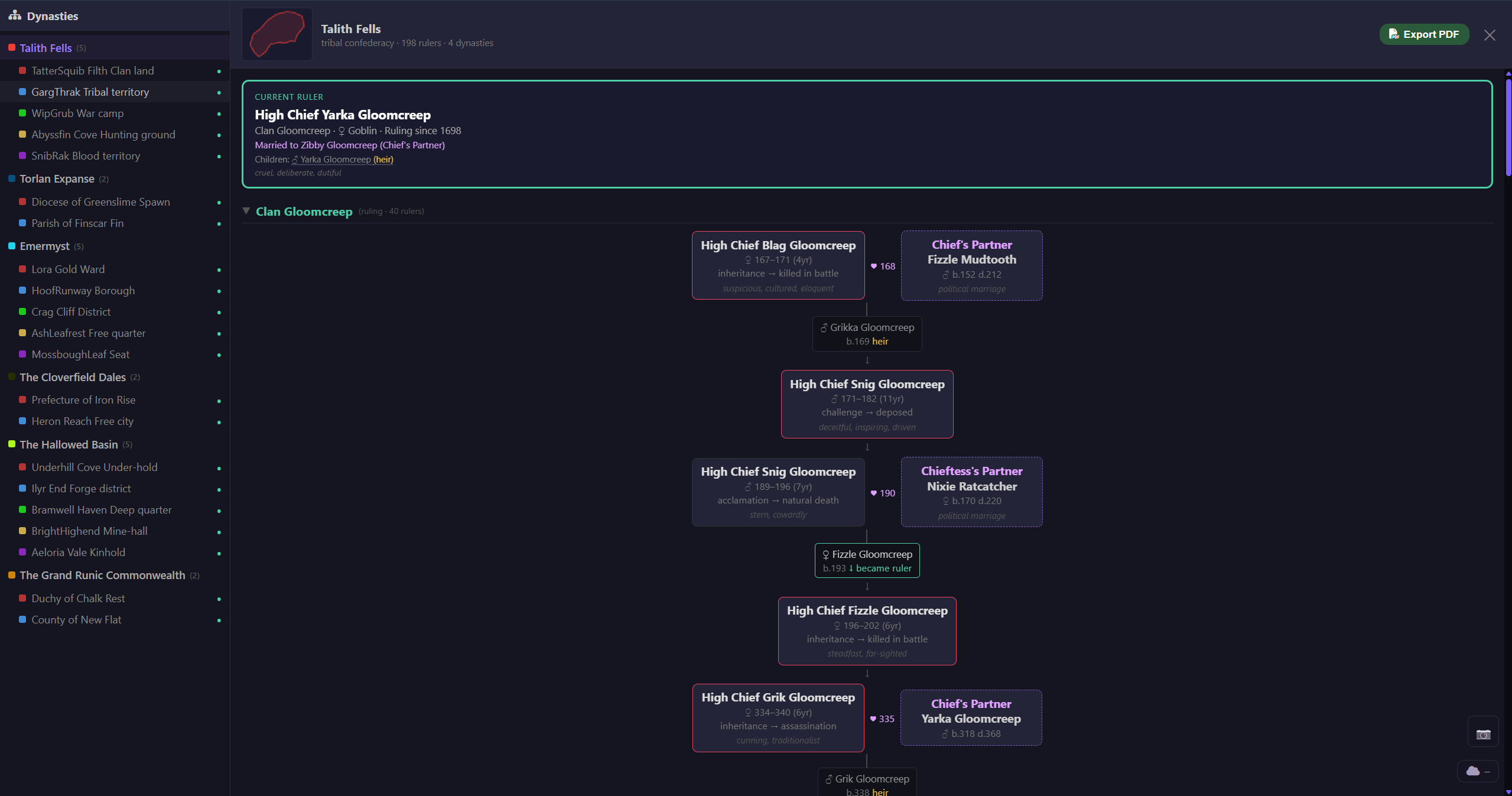
Dynasties & Rulers
Every realm generates succession chains across centuries. Rulers have spouses, children, claims, personalities, and full NPC stat blocks. When power changes hands, it leaves a trail your campaign can actually use.
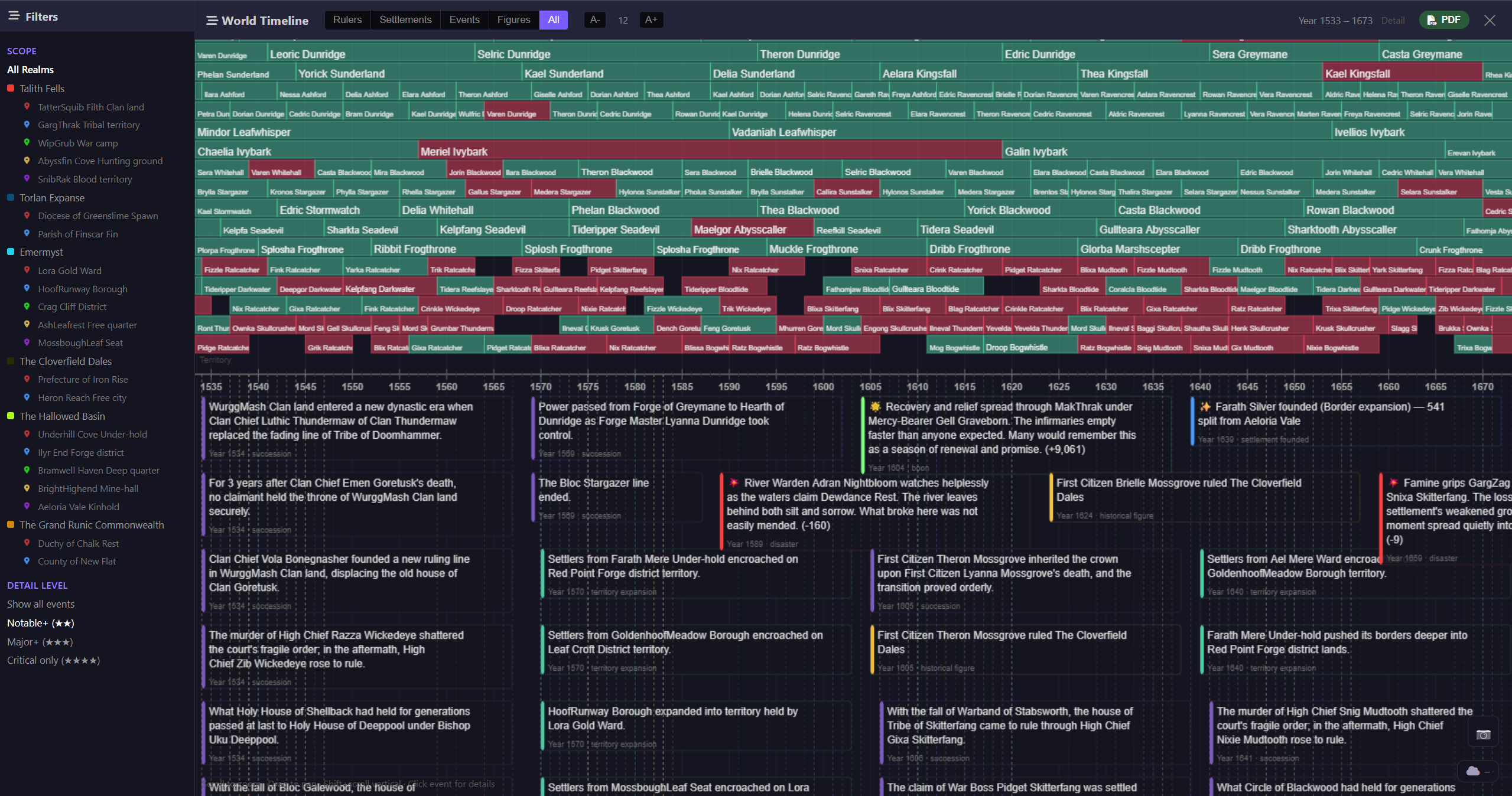
Living World History
Thousands of events are generated across the life of the world — foundings, disasters, boons, assassinations, conquests, successions, and collapses. Browse it on a zoomable timeline and move through the history of realms, territories, and rulers as if the world had already been lived in.
Route & Road Generation
Generate roads, trade routes, sea lanes, and early trails with terrain-weighted logic. Capitals connect differently than markets, and wilderness behaves differently than empire. The result is movement that feels earned.
Export & World Journal
Export your world as a PDF compendium, self-contained HTML site, or printable journal with regions, countries, territories, settlements, and POIs already structured for table use. High-resolution map export is built in.
Encounter Hooks & Tactical Follow-Through
Attach encounter hooks directly to locations so downstream tools already know what lives where. When players move through the world, your encounters are already anchored to the map.
Built for a Connected Toolset
Realm Engine is designed as the source layer beneath the rest of your table — feeding travel, encounters, VTT use, exports, and future connected systems without rebuilding the same world twice.
One world. Every tool.
Realm Engine is the source of truth. Everything else can stand alone, pull from it, or stay in sync with the state it builds.
The world builder. Terrain, civilizations, cities, routes, factions — everything downstream depends on this.
Terrain-weighted travel time, weather, and random encounter generation along world-generated routes.
Pull your world into a darker, more immersive play space. Maps, regions, and faction states flow in automatically.
Launch prepared encounters from world locations. Move from regional planning to tabletop action without friction.
Build for free. Go further with a subscription.
Free to start. Built to scale with you. Create up to 3 worlds free. Subscribe to unlock unlimited worlds, full simulation control, PDF exports, and premium features across a growing ecosystem of connected tools — including The Long Road, Veil, and Encounter Manager.
Your world awaits.
The world-builder, the simulation, the tools — all of it is ready. Step in and start building.
 Launch Realm Engine
Want to stay in the loop? Sign up for updates on new features and releases.